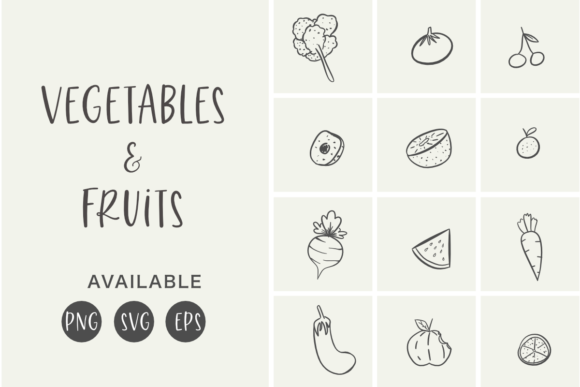
Vegetables Fruits Illustrations: A Practical Review for Embroidery Designers
When you work with machine embroidery designs day in and day out, you develop a sixth sense for which illustrations will stitch cleanly and which ones will cause headaches. I have been digitizing and stitching commercial embroidery projects for over a decade, and I have learned to read a design file the way a tailor reads fabric grain. So when I came across the Vegetables Fruits Illustrations collection, I did what I always do: I opened the file, studied the shapes, imagined the thread paths, and asked myself whether this was something I would trust in a real client project or a small shop product.
The answer surprised me. This set of forty-two illustrations carries a warmth and simplicity that works well for both custom apparel and handmade gift items. But like any digital embroidery file, it has strengths and limitations that matter depending on what you are making. Let me walk through what I found after testing this collection in real stitching conditions.
First Look at the Vegetables Fruits Illustrations Set
Opening the Vegetables Fruits Illustrations file, I noticed the clean outlines and friendly proportions right away. The illustrations are not overly detailed, which is a good sign for embroidery. When a design has too many tiny lines or intricate curves, it often forces stitch density too high, and that can ruin the fabric feel or cause registration problems. These illustrations keep the silhouettes readable and the internal details minimal. That makes them strong candidates for satin stitch borders, fill stitch bodies, and even some applique work if you prefer fabric layering.
The mood of the collection is cheerful and approachable. It does not try to be photorealistic or hyper-detailed. Instead, it leans into a hand-drawn, slightly playful style that feels natural on a kitchen towel, a tote bag, or a child's apron. That kind of visual personality sells well at craft fairs and on Etsy, because customers respond to warmth and recognizability. A carrot that looks like a carrot, an apple that reads as an apple, a tomato with a clear shape — these are the kinds of designs that build trust with buyers who are looking for handmade products that feel genuine.
How These Illustrations Behave in Real Embroidery Projects
I tested the Vegetables Fruits Illustrations on a few different products to see how they held up under the needle. My first test was a custom embroidered tote bag made from medium-weight cotton canvas. I used a medium hoop size and a standard tear-away stabilizer. The design stitched cleanly, with no pull or distortion around the edges. The fill stitches covered the fabric evenly, and the satin stitch outlines stayed crisp without any gaps or overlapping.
Next, I moved to a sweatshirt embroidery project. Sweatshirt fabric has more give than canvas, so I switched to a cut-away stabilizer and added a lightweight topping to prevent the stitches from sinking into the fleece. The Vegetables Fruits Illustrations handled this fabric change well. The shapes remained recognizable, and the thread colors I chose — a mix of bright greens, reds, oranges, and yellows — popped nicely against the heather gray background. If you are an apparel decorator who regularly works with custom apparel, this collection gives you a solid set of options for men's, women's, and children's garments.
I also tested one of the illustrations as an embroidered patch on a cap. Curved surfaces like caps require lower stitch density and careful digitizing, because the fabric is stretched over a curved frame. The illustration I used had a simple enough shape that it adapted well to the cap. The key was keeping the design size moderate and not forcing it into a tiny hoop. For caps, I recommend using a medium hoop size and a firm stabilizer to keep the fabric from shifting.
Where Vegetables Fruits Illustrations Shines Brightest
After running several tests, I can tell you that this collection works best on products where the design can be the star without competing with heavy background textures. Here are the projects where I saw the strongest results:
- Tote bags and canvas bags — The illustrations feel right at home on a reusable shopping bag or a farmer's market tote. Customers love this kind of graphic for everyday use.
- Aprons and kitchen towels — Vegetables and fruits are a natural fit for kitchen textiles. These designs stitch well on linen and cotton tea towels, and they hold up to washing when you use quality thread and proper stabilizer.
- Baby clothes and nursery decor — The friendly shapes work beautifully on baby onesies, bibs, and receiving blankets. The detail level is low enough that the designs stay soft and flexible, which matters for infant wear.
- Personalized gifts and holiday embroidery — I could see these illustrations being used for housewarming gifts, wedding shower presents, or even a set of matching kitchen towels as a holiday gift. The collection feels giftable because the theme is universal and the style is inviting.
- Small shop merchandise and Etsy listings — If you sell handmade products online, the Vegetables Fruits Illustrations give you a cohesive look that you can repeat across multiple items. That consistency helps build brand recognition and customer trust.
Where to Use These Illustrations with Caution
No embroidery design is perfect for every situation, and I want to be honest about where this collection needs extra attention. The following scenarios require careful planning before you stitch:
- Small hoop sizes and tiny details — If you try to shrink these illustrations down to fit a very small hoop, the internal details may become too tight for the needle to render cleanly. Always test the design at your intended size on scrap fabric first.
- Stretchy or thin fabrics — Knits, jersey, and lightweight silks can distort under dense stitching. Use a strong stabilizer and reduce stitch density if your machine allows it. For stretchy fabrics, I recommend a cut-away stabilizer and a lightweight topping.
- Dark fabric backgrounds — These illustrations rely on clear outlines and bright colors. On dark fabric, you may need to adjust thread colors to maintain contrast. A white or light-colored satin stitch border can help define the shapes against a black or navy background.
- Dense stitch areas in layered garments — If you are stitching on a sweatshirt or jacket with a thick lining, the needle may struggle to penetrate multiple layers. Test the design on the actual garment material before committing to a production run.
- Frequent washing and heavy use — For products like kitchen towels or baby items that will be washed often, use high-quality thread and a dense enough stitch pattern to prevent fraying. Check the stitch density of each illustration and reinforce any narrow points.
Practical Designer Notes for Embroidery Projects
Before I use any digital embroidery file in a commercial project, I run through a checklist. Here is what I recommend for the Vegetables Fruits Illustrations collection:
- Test on scrap fabric first. Always stitch a sample on the exact fabric you plan to use. This confirms stitch density, thread tension, and overall appearance.
- Check thread color contrast. View the design in black and white to see if the shapes remain distinct. If they blur together, adjust your thread palette accordingly.
- Review stitch density for each illustration. Some designs in the collection may have more fill stitches than others. If the density feels too high for your fabric, consider reducing it or switching to a lighter stabilizer.
- Confirm hoop size before starting. Make sure the illustration fits comfortably within your hoop without crowding the edges. Leave enough margin for proper hooping.
- Inspect small details for clarity. Look at the narrowest parts of each design. If a stem or leaf is too thin, it may break during stitching or disappear into the fabric.
- Test on both light and dark fabric backgrounds. The same design can look dramatically different on white versus black fabric. Adjust colors and outlines accordingly.
- Use proper stabilizer for the fabric type. Tear-away for stable fabrics, cut-away for stretchy fabrics, and a topping for napped fabrics like fleece or terry cloth.
- Confirm licensing before selling finished items. The product description mentions editable EPS files and suitability for commercial use, but always verify the license terms for your specific business needs. If you plan to sell finished products or digital products, you need to know exactly what is allowed.
Visual Appeal and Customer Trust in Handmade Products
In my experience, the designs that sell best are the ones that feel intentional and well-crafted. The Vegetables Fruits Illustrations collection has a cohesive visual language that makes it easy to create a product line with a unified look. Whether you are making personalized gifts for a holiday market or building an Etsy shop around kitchen-themed embroidery, this set gives you a foundation that customers will recognize and remember.
The illustrations also work well for printable mockups and digital product previews. If you sell digital embroidery files or design assets, you can use these illustrations to create attractive listings that show potential buyers exactly what they will get. The clean shapes photograph well and translate clearly to screen displays.
For boutique branding and small shop products, the Vegetables Fruits Illustrations offer a versatile palette of images that can be mixed and matched across different items. You could use a single apple on a tote bag, a cluster of vegetables on an apron, or a repeating pattern of fruits on a pillow cover. The design assets give you flexibility without sacrificing consistency.
Final Thoughts Before You Stitch
The Vegetables Fruits Illustrations collection is a solid choice for anyone who works with machine embroidery designs, whether you are a hobbyist making personalized gifts or a professional decorator managing commercial embroidery projects. The illustrations are friendly, practical, and well-suited for a wide range of products, from custom apparel to handmade home goods. They stitch cleanly on most fabrics when you use proper stabilizer and test your settings beforehand.
If you are an Etsy seller or a small shop owner looking for design assets that can carry a product line, this set is worth considering. It gives you forty-two illustrations that are ready to use in embroidery projects, printable mockups, and digital product previews. Just remember to test each design at your intended size, check thread contrast against your fabric, and confirm the license terms before selling finished items. With those precautions in place, the Vegetables Fruits Illustrations can become a reliable part of your creative toolkit.